
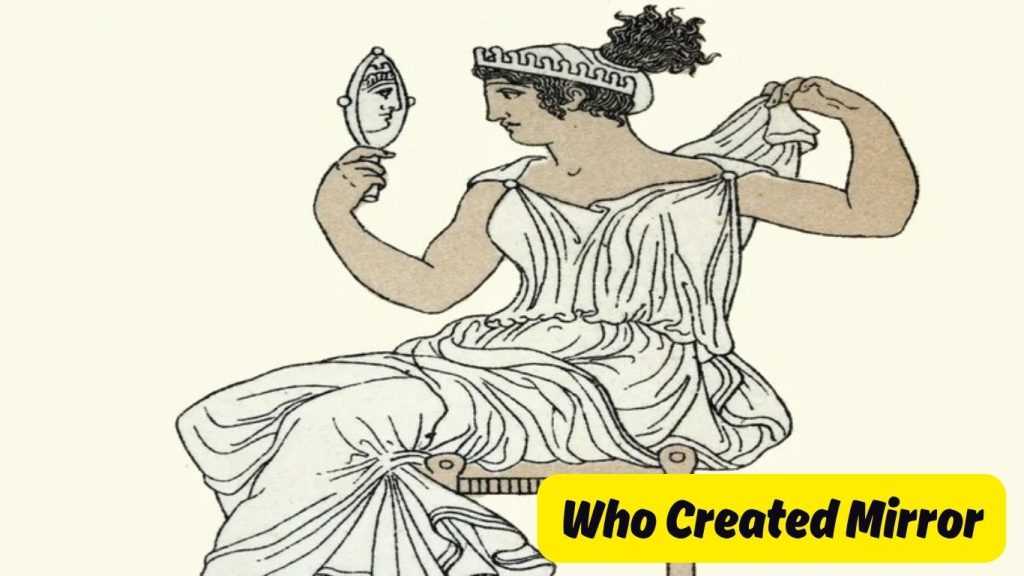
Who created mirror? The answer spans thousands of years and multiple civilizations. From ancient polished obsidian to modern silvered glass, the mirror’s evolution is a fascinating journey through human ingenuity. This article reveals the surprising origin story behind one of humanity’s most essential inventions.
Key Takeaways
- Ancient Origins: The first mirrors were polished obsidian stones used over 8,000 years ago in modern-day Turkey.
- Multiple Inventors: No single person created the mirror; it evolved through contributions from many civilizations.
- Material Evolution: Mirrors progressed from polished stone to bronze, silver, and eventually glass with metal backing.
- Venetian Breakthrough: Venetian craftsmen in the 1500s revolutionized mirror-making with their superior glass techniques.
- Modern Innovation: Justus von Liebig invented the silvered glass mirror in 1835, creating the mirrors we use today.
- Cultural Impact: Mirrors transformed art, science, navigation, and daily grooming across civilizations.
- Global Spread: Mirror technology spread from the Middle East to Europe, Asia, and eventually worldwide.
Quick Answers to Common Questions
Who invented the first mirror?
The first mirrors were polished obsidian stones used by ancient people in Anatolia (modern-day Turkey) around 6000 BCE. No single inventor is credited with this discovery.
Who created the modern silvered glass mirror?
German chemist Justus von Liebig invented the silvered glass mirror in 1835. His chemical process for applying silver to glass created the mirrors we use today.
What were ancient Egyptian mirrors made of?
Ancient Egyptian mirrors were typically made from highly polished bronze or copper. They often featured ornate handles carved from wood, ivory, or bone.
Why were Venetian mirrors so special?
Venetian mirrors were special because Venetian glassmakers on the island of Murano developed techniques for producing exceptionally clear and flat glass in the 15th century, making their mirrors the finest in the world.
How did mirrors become affordable for everyone?
Mirrors became affordable after Justus von Liebig’s 1835 invention of the silvered glass process. This allowed mirrors to be mass-produced cheaply, making them accessible to ordinary people for the first time.
📑 Table of Contents
- Who Created Mirror: The Surprising Origin Story
- The Very First Mirrors: Polished Stone
- Bronze Age Mirrors: Metal Takes Over
- The Glass Revolution: A New Era for Mirrors
- The Modern Mirror: Silvered Glass Changes Everything
- Mirrors in Science and Technology
- The Cultural Significance of Mirrors
- Conclusion
Who Created Mirror: The Surprising Origin Story
Have you ever stopped to wonder who created mirror? It is one of those objects we use every single day without a second thought. We check our reflection in the morning, adjust our hair, and move on with our busy lives. But the story behind who created mirror is far more fascinating than you might expect.
The truth is, no single person can claim credit for inventing the mirror. Instead, this incredible object evolved over thousands of years through the contributions of many brilliant minds and civilizations. From ancient stones to modern glass, the journey of the mirror is a testament to human creativity and our deep desire to see ourselves clearly.
In this article, we will explore the complete origin story behind who created mirror. We will travel through time and across continents to uncover how this everyday essential came to be. By the end, you will never look at your bathroom mirror the same way again.
The Very First Mirrors: Polished Stone
Obsidian Mirrors in Ancient Turkey
The story of who created mirror begins around 6000 BCE in the region of Anatolia, which is modern-day Turkey. Archaeologists discovered polished obsidian stones that were used as mirrors by early humans. Obsidian is a naturally occurring volcanic glass that forms when lava cools rapidly. When polished to a smooth surface, it creates a surprisingly reflective finish.
These ancient obsidian mirrors were not as clear as what we use today. The reflection was dark and somewhat distorted. But for people living thousands of years ago, seeing even a rough image of themselves was nothing short of magical. These early mirrors were likely used for spiritual rituals and personal grooming.
The discovery of obsidian mirrors tells us something important about human nature. Even in prehistoric times, people were fascinated by their own appearance. This fascination drove innovation and led to better and better reflective surfaces over the centuries.
Bronze Age Mirrors: Metal Takes Over
Ancient Egypt and Mesopotamia
As civilizations advanced, so did mirror technology. By around 4000 BCE, people in ancient Egypt and Mesopotamia began crafting mirrors from polished bronze. These metal mirrors were a significant improvement over stone. They offered a clearer reflection and were easier to shape and carry.
Egyptian mirrors were often made from highly polished copper or bronze. They featured ornate handles carved from wood, ivory, or bone. These mirrors were luxury items owned primarily by the wealthy and powerful. Pharaohs and nobles considered them prized possessions.
In Mesopotamia, polished metal mirrors were equally prized. Archaeological finds reveal beautifully crafted mirrors with intricate designs. These discoveries show that the desire for self-reflection was universal across ancient cultures.
Chinese and Indian Contributions
Meanwhile, in ancient China, bronze mirrors were being produced as early as 2000 BCE. Chinese mirror-makers developed sophisticated techniques for creating highly reflective surfaces. Their mirrors often featured elaborate patterns and inscriptions on the back.
In India, polished metal mirrors were also common. Ancient Indian texts reference mirrors made from various metals. These mirrors played important roles in daily life, religious ceremonies, and personal adornment.
The global spread of metal mirrors shows that the question of who created mirror has many answers. Different cultures independently developed similar solutions to the same human need.
The Glass Revolution: A New Era for Mirrors
Early Glass Mirrors in Rome
The next major leap in answering who created mirror came with the introduction of glass. The Romans were among the first to experiment with glass mirrors. Around the 1st century CE, they began coating the back of glass with molten lead or gold to create a reflective surface.
These early glass mirrors were not perfect. The glass was often uneven and contained bubbles and imperfections. But they represented a huge technological advancement. Glass mirrors were lighter than metal ones and could be made in larger sizes.
Roman glass mirrors were expensive and rare. Only the wealthiest citizens could afford them. Most people continued to rely on polished metal for their daily grooming needs.
Venetian Mastery in the Renaissance
The real breakthrough in glass mirror production came in 15th-century Venice. Venetian glassmakers on the island of Murano developed techniques for producing exceptionally clear and flat glass. This innovation was crucial for creating high-quality mirrors.
Venetian craftsmen guarded their mirror-making secrets fiercely. Revealing these secrets was punishable by death. The mirrors produced in Venice were considered the finest in the world. They were luxury items that only royalty and the extremely wealthy could afford.
The Venetian monopoly on fine mirrors lasted for over a century. During this time, mirrors became symbols of wealth and status. French and English nobles paid enormous sums for Venetian mirrors to decorate their palaces.
The Modern Mirror: Silvered Glass Changes Everything
Justus von Liebig’s Invention
The person most commonly credited with creating the modern mirror is German chemist Justus von Liebig. In 1835, he developed a process for applying a thin layer of metallic silver to the back of a glass surface. This silvered glass mirror was revolutionary.
Liebig’s process involved a chemical reaction that deposited silver directly onto the glass. The result was a mirror with a bright, clear, and highly reflective surface. This was a massive improvement over previous methods.
The invention of the silvered glass mirror made mirrors affordable for ordinary people. For the first time in history, average families could own a quality mirror. This democratization of mirrors had a profound impact on daily life around the world.
How Modern Mirrors Are Made
Today, most mirrors are made using a process similar to Liebig’s original method. A thin layer of aluminum or silver is applied to the back of a glass sheet. This is then protected by a layer of paint to prevent damage and corrosion.
Modern manufacturing techniques allow mirrors to be produced quickly and cheaply. You can find mirrors in virtually every home, office, and public space. They come in countless shapes, sizes, and styles to suit every need and budget.
If you are curious about what is a mirror made of, the answer involves several layers working together. The glass provides a smooth surface, the metal coating creates the reflection, and the protective backing ensures durability.
Mirrors in Science and Technology
Telescopes and Optical Instruments
Mirrors have played a crucial role in scientific advancement. The invention of the reflecting telescope by Isaac Newton in 1668 relied on curved mirrors to gather and focus light. This design was superior to lens-based telescopes because it eliminated color distortion.
Today, the world’s most powerful telescopes use massive mirrors to observe distant galaxies. The James Webb Space Telescope features a 6.5-meter gold-coated mirror that can see billions of light-years into space. Without the mirror, our understanding of the universe would be vastly limited.
Mirrors are also essential in microscopes, lasers, cameras, and countless other optical devices. They have enabled discoveries that have transformed our understanding of the natural world.
Solar Energy and Industrial Applications
Modern technology continues to find new uses for mirrors. Solar power plants use vast arrays of mirrors to concentrate sunlight and generate electricity. These concentrated solar facilities can produce enough energy to power thousands of homes.
In manufacturing, mirrors are used in precision instruments, safety equipment, and quality control systems. They are also essential in medical devices, dental tools, and surgical equipment. The versatility of mirrors makes them indispensable in modern industry.
The Cultural Significance of Mirrors
Mirrors in Art and Literature
Throughout history, mirrors have held deep symbolic meaning in art and literature. They represent self-knowledge, truth, vanity, and the boundary between reality and illusion. Artists like Jan van Eyck and Diego Velázquez famously incorporated mirrors into their paintings.
In literature, mirrors appear in countless stories and myths. From Snow White’s magic mirror to Alice’s looking glass, mirrors serve as powerful metaphors for self-discovery and transformation. They challenge us to look beyond the surface and examine our true selves.
The cultural impact of mirrors extends to philosophy and psychology. The concept of the mirror stage in child development, proposed by Jacques Lacan, suggests that recognizing oneself in a mirror is a crucial step in forming identity.
Mirrors in Daily Life Today
Today, mirrors are so common that we rarely think about their importance. We use them for grooming, driving, decorating, and even exercising. They make small spaces appear larger and dark rooms feel brighter.
If you want to learn more about what is a mirror and how different types work, there is a wealth of information available. From bathroom mirrors to decorative wall mirrors, each type serves a specific purpose in our homes and lives.
The next time you glance at your reflection, take a moment to appreciate the thousands of years of innovation that made that simple act possible. The story of who created mirror is really the story of human progress itself.
Conclusion
So, who created mirror? The answer is not one person but many. From the ancient Anatolian people who polished obsidian stones to Justus von Liebig who perfected silvered glass, countless individuals contributed to the mirror we know today.
The journey of the mirror reflects our own evolution as a species. It shows our ingenuity, our desire for self-knowledge, and our ability to improve upon nature. Every time we look into a mirror, we are connecting with thousands of years of human history.
The next time someone asks you who created mirror, you can share this fascinating story. It is a tale of innovation, artistry, and the enduring human desire to see ourselves clearly. And that is a story worth telling.
Frequently Asked Questions
Who created mirror in ancient times?
Ancient people in multiple civilizations independently created early mirrors. The earliest known mirrors were polished obsidian from Turkey around 6000 BCE, followed by polished bronze mirrors in Egypt, Mesopotamia, China, and India.
What is the oldest mirror ever found?
The oldest known mirrors are polished obsidian stones discovered in Anatolia, Turkey, dating back approximately 8,000 years. These volcanic glass mirrors provided a dark but functional reflection for ancient peoples.
How did Justus von Liebig create the modern mirror?
Justus von Liebig developed a chemical process in 1835 that deposited a thin layer of metallic silver onto glass. This silvered glass mirror was brighter, clearer, and cheaper to produce than any previous mirror type.
Were mirrors always made of glass?
No, mirrors were not always made of glass. Early mirrors were made from polished stone like obsidian, then polished metals like bronze and copper. Glass mirrors did not become common until the 19th century.
Why were Venetian mirror-makers so secretive?
Venetian mirror-makers on the island of Murano guarded their techniques because they held a monopoly on fine mirror production. Revealing their secrets was punishable by death, and their methods remained hidden for over a century.
How are mirrors used in science today?
Mirrors are essential in telescopes, microscopes, lasers, cameras, and solar power plants. They enable scientific discoveries by gathering, focusing, and directing light in ways that lenses cannot achieve alone.